---
title: Where to live in Graça, Lisbon | Hillside, views & daily life | CRT
description: "Graça, Lisbon: hillside neighbourhood between São Vicente and the castle. Views, stairs, residents and visitors. Guide — no stale €/m²."
---
[](https://marketing.cavalcanti.team/en/)
Marketing Properties With Soul.
- [Home](https://marketing.cavalcanti.team/en/)
- [Search Properties](https://marketing.cavalcanti.team/en/search-properties)
- [All listings](https://marketing.cavalcanti.team/en/search-properties)
- [Lisbon](https://marketing.cavalcanti.team/en/lisbon-real-estate)
- [Cascais](https://marketing.cavalcanti.team/en/cascais-real-estate)
- [Sintra](https://marketing.cavalcanti.team/en/sintra-real-estate)
- [Featured Properties](https://marketing.cavalcanti.team/en/featured-properties)
- [Buyers & relocation](https://marketing.cavalcanti.team/en/relocating-to-portugal)
- Where to live
- [Overview (quiz)](https://marketing.cavalcanti.team/en/where-to-live)
- [Lisbon](https://marketing.cavalcanti.team/en/where-to-live/lisbon)
- [Cascais](https://marketing.cavalcanti.team/en/where-to-live/cascais)
- [Sintra](https://marketing.cavalcanti.team/en/where-to-live/sintra)
- Tools
- [IMT & stamp duty](https://marketing.cavalcanti.team/en/imt-stamp-duty)
- [Buying costs](https://marketing.cavalcanti.team/en/portugal-property-buying-costs)
- [Mortgage guide](https://marketing.cavalcanti.team/en/mortgage-buying-home-portugal)
- [Investment calculator](https://marketing.cavalcanti.team/en/portugal-property-investment-calculator)
- [Property valuation](https://marketing.cavalcanti.team/en/market-valuation)
- [News & Research](https://marketing.cavalcanti.team/en/insights)
- [All insights](https://marketing.cavalcanti.team/en/insights)
- [Buying guides](https://marketing.cavalcanti.team/en/buying-guides)
- [Cascais vs Lisbon](https://marketing.cavalcanti.team/en/cascais-vs-lisbon-investment)
- [Sintra vs Cascais](https://marketing.cavalcanti.team/en/sintra-vs-cascais)
[Contact](https://marketing.cavalcanti.team/en/contact) [Partners](https://marketing.cavalcanti.team/pt/parceiros?lang=en)
🇬🇧 EN English 🇵🇹 PT Português
- [Home](https://marketing.cavalcanti.team/en/)
- [Search Properties](https://marketing.cavalcanti.team/en/search-properties)
- [All listings](https://marketing.cavalcanti.team/en/search-properties)
- [Lisbon](https://marketing.cavalcanti.team/en/lisbon-real-estate)
- [Cascais](https://marketing.cavalcanti.team/en/cascais-real-estate)
- [Sintra](https://marketing.cavalcanti.team/en/sintra-real-estate)
- [Featured Properties](https://marketing.cavalcanti.team/en/featured-properties)
- [Buyers & relocation](https://marketing.cavalcanti.team/en/relocating-to-portugal)
- Where to live
- [Overview (quiz)](https://marketing.cavalcanti.team/en/where-to-live)
- [Lisbon](https://marketing.cavalcanti.team/en/where-to-live/lisbon)
- [Cascais](https://marketing.cavalcanti.team/en/where-to-live/cascais)
- [Sintra](https://marketing.cavalcanti.team/en/where-to-live/sintra)
- Tools
- [IMT & stamp duty](https://marketing.cavalcanti.team/en/imt-stamp-duty)
- [Buying costs](https://marketing.cavalcanti.team/en/portugal-property-buying-costs)
- [Mortgage guide](https://marketing.cavalcanti.team/en/mortgage-buying-home-portugal)
- [Investment calculator](https://marketing.cavalcanti.team/en/portugal-property-investment-calculator)
- [Property valuation](https://marketing.cavalcanti.team/en/market-valuation)
- [News & Research](https://marketing.cavalcanti.team/en/insights)
- [All insights](https://marketing.cavalcanti.team/en/insights)
- [Buying guides](https://marketing.cavalcanti.team/en/buying-guides)
- [Cascais vs Lisbon](https://marketing.cavalcanti.team/en/cascais-vs-lisbon-investment)
- [Sintra vs Cascais](https://marketing.cavalcanti.team/en/sintra-vs-cascais)
- [Contact](https://marketing.cavalcanti.team/en/contact)
- [Partners](https://marketing.cavalcanti.team/pt/parceiros?lang=en)
Practical guide · Lisbon · Graça · updated 2026
# Where to live in Graça, Lisbon?
[Home](https://marketing.cavalcanti.team/en/?hsLang=en) › [Lisbon](https://marketing.cavalcanti.team/en/where-to-live/lisbon?hsLang=en) › Graça
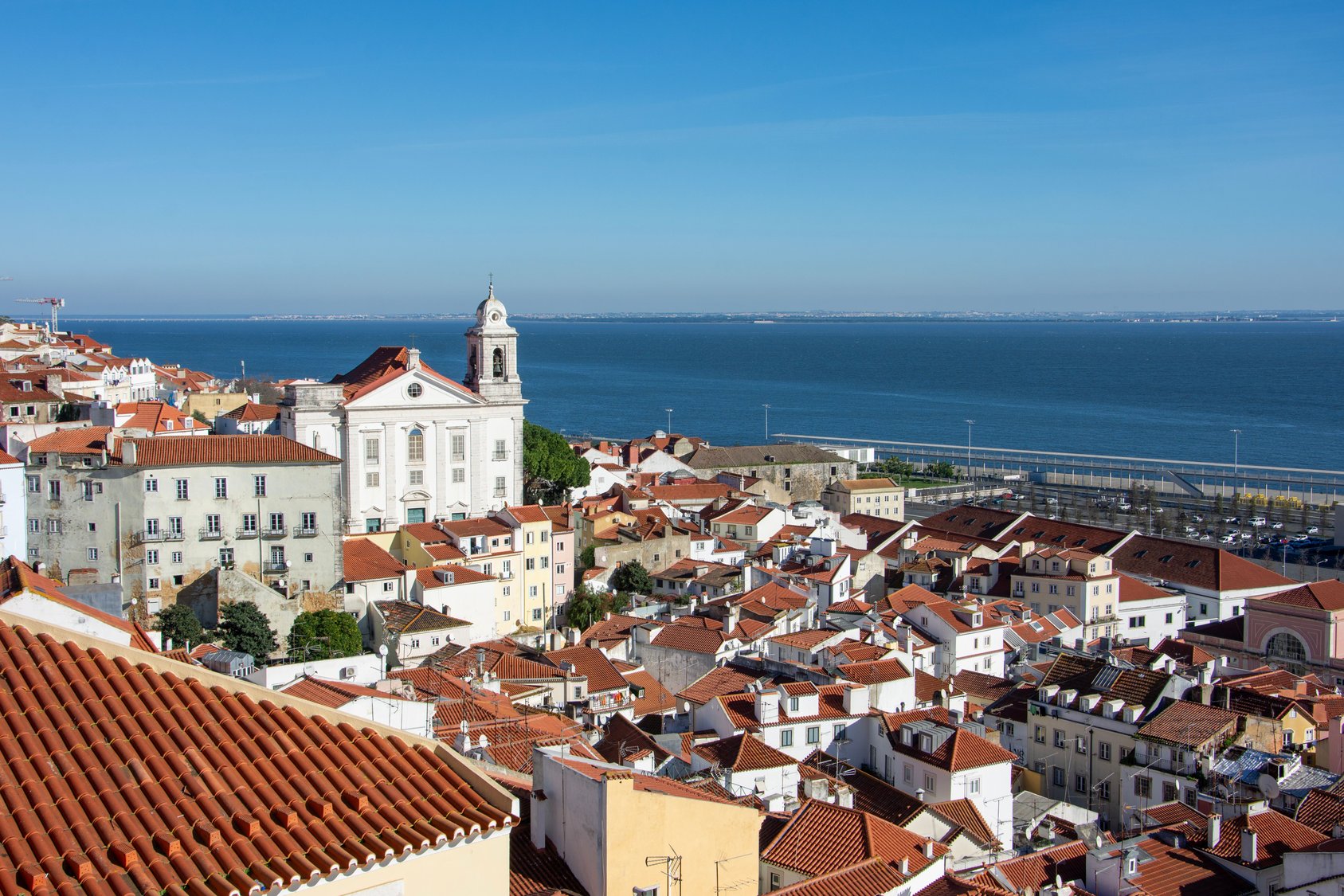
Graça is a Lisbon hillside: viewpoints, stairs and a mix of residents and visitors between São Vicente and the castle. This is not a clone of the [Lisbon guide](https://marketing.cavalcanti.team/en/where-to-live/lisbon?hsLang=en) and not a property landing — it is this neighbourhood’s brief. To buy in the city: [Lisbon real estate](https://marketing.cavalcanti.team/en/lisbon-real-estate?hsLang=en). The quiz on [Where to live](https://marketing.cavalcanti.team/en/where-to-live?hsLang=en) helps test whether the hill fits your daily life.
## Who Graça is for
Three briefs show up often: (1) buyers who want historic Lisbon with views and neighbourhood life, without Chiado as a daily stage; (2) those who accept a slope, an old building and, often, no lift, in exchange for light and the Tagus; (3) people who already know São Vicente / Alfama and want the more residential side of the same hill. If you need metro at the door, Avenidas or Campo de Ourique, start with the Lisbon guide — Graça is a different contract: calçada, gradient and barrio rhythm.
## Hill, views and getting around
Downtown (Baixa, Martim Moniz, Intendente) is close on a map and uphill on foot. Tram 28 and buses serve the hill; a car is rarely practical day to day (parking, narrow streets). We do not invent commute minutes: test your real slope at the hour you would leave home. Summer brings more visitors to the miradouros; the rest of the year the neighbourhood breathes differently. CRT is Lisbon-based (Praça Marquês de Pombal — NAP in the footer); there is no second office in Graça.
## Graça is not Alfama (or Chiado)
**Alfama** — more maze, more tourism, less “neighbours’ street” in some pockets. **São Vicente / Santa Engrácia** — the same hillside, the Pantheon, a seam with Graça. **Mouraria / Intendente** — flatter in parts, a more contemporary mix. **Chiado / Príncipe Real** — maximum urban and historic-centre pricing. Graça sits in between: views, calçada, local shops and tourist pressure at the viewpoints — not a ranking, a different weekly calendar.
## Buying here — orientation, not a table that goes stale
A T1 with a view, a T2 with no lift and a refurbished building are different segments. We do not publish €/m² figures that age in weeks. Watch: slope, light, building condition, licences and viewpoint/party noise. For your case: [market valuation](https://marketing.cavalcanti.team/en/market-valuation?hsLang=en), [featured homes](https://marketing.cavalcanti.team/en/featured-properties?hsLang=en) or the [Lisbon real estate](https://marketing.cavalcanti.team/en/lisbon-real-estate?hsLang=en) hub. Purchase costs are Portugal-wide — [simulate IMT](https://marketing.cavalcanti.team/en/imt-stamp-duty?hsLang=en).
## How CRT helps
Cavalcanti RealEstate Team (AMI 18470) runs search and acquisition in Lisbon, Cascais and Sintra — an independent team powered by eXp Portugal. We work the hillside across the market, not only featured listings. We do not replace a lawyer or notary. Moving from abroad? Cross this with the [relocation guide](https://marketing.cavalcanti.team/en/relocating-to-portugal?hsLang=en).
## Graça on the map
The neighbourhood — not the CRT office.
[Open in Google Maps](https://www.google.com/maps/search/?api=1&query=Gra%C3%A7a%2C+Lisboa%2C+Portugal)
## Frequently asked questions about living in Graça
Is Graça a good place to live year-round?
Yes, if you accept a hill and a neighbourhood with visitors at the viewpoints. Test a weekday night and a summer weekend — not only sunset. If you need metro at the door and flatter streets, look at Avenidas, Alvalade or Campo de Ourique in the [Lisbon guide](https://marketing.cavalcanti.team/en/where-to-live/lisbon?hsLang=en).
Do I need a car in Graça?
Day to day, rarely. Stairs, the tram and buses do the work; parking is the hidden cost. A car makes sense if school or work sits outside the central mesh — test the real loop.
Graça or Alfama — what changes?
Same hillside, different briefs. Alfama is more of a maze and, on many stretches, more touristic. Graça tends to hold more residents’ life around the viewpoints and São Vicente. Walk both; slope and noise decide more than the neighbourhood name.
Do old buildings in Graça have a lift?
Many do not. Confirm floor, access and works in the building before you lock in. A Tagus view does not offset a fifth floor with no lift if that is not your daily life.
What extra costs are there when buying in Graça?
Purchase taxes are Portugal-wide (IMT + Stamp Duty), plus notary, land registry, IMI and condo fees. There is no Graça levy that replaces IMT. [Simulate IMT](https://marketing.cavalcanti.team/en/imt-stamp-duty?hsLang=en).
Do you have an office in Graça?
No. CRT is based in Lisbon, Praça Marquês de Pombal, 14 (address in the footer). We cover the neighbourhood as a service area — search and viewings on the ground. We do not invent an office per hill.
[Take the quiz](https://marketing.cavalcanti.team/en/where-to-live?hsLang=en) [Lisbon real estate](https://marketing.cavalcanti.team/en/lisbon-real-estate?hsLang=en) [Talk to us](https://marketing.cavalcanti.team/en/contact?hsLang=en)
[](https://marketing.cavalcanti.team/en/?hsLang=en)
Cavalcanti RealEstate Team® powered by eXp Portugal
AMI: 18470 · TAX ID: 516798162 · Lisbon
Specialized in real estate investments in Portugal for international clients.
[+351 300 505 130](tel:+351300505130) [+351 300 505 130](https://wa.me/351300505130?text=Hello%21+I%27d+like+more+information.) [admin@cavalcanti.team](mailto:admin@cavalcanti.team)
Back
Areas we cover
[Cascais](https://marketing.cavalcanti.team/en/cascais-real-estate?hsLang=en) [Lisbon](https://marketing.cavalcanti.team/en/lisbon-real-estate?hsLang=en) [Sintra](https://marketing.cavalcanti.team/en/sintra-real-estate?hsLang=en)
[Buyers & relocation](https://marketing.cavalcanti.team/en/relocating-to-portugal?hsLang=en) [Where to live](https://marketing.cavalcanti.team/en/where-to-live?hsLang=en) [Cascais vs Lisbon](https://marketing.cavalcanti.team/en/cascais-vs-lisbon-investment?hsLang=en) [Sintra vs Cascais](https://marketing.cavalcanti.team/en/sintra-vs-cascais?hsLang=en) [Search Properties](https://marketing.cavalcanti.team/en/search-properties?hsLang=en) [Featured Properties](https://marketing.cavalcanti.team/en/featured-properties?hsLang=en) [IMT & stamp duty](https://marketing.cavalcanti.team/en/imt-stamp-duty?hsLang=en) [Buying costs](https://marketing.cavalcanti.team/en/portugal-property-buying-costs?hsLang=en) [Mortgage guide](https://marketing.cavalcanti.team/en/mortgage-buying-home-portugal?hsLang=en) [Residents vs non-residents](https://marketing.cavalcanti.team/en/portugal-mortgage-residents-non-residents?hsLang=en) [Investment calculator](https://marketing.cavalcanti.team/en/portugal-property-investment-calculator?hsLang=en) [Property valuation](https://marketing.cavalcanti.team/en/market-valuation?hsLang=en) [Partners](https://marketing.cavalcanti.team/pt/parceiros?lang=en)
[Privacy Policy](https://marketing.cavalcanti.team/en/privacy-policy?hsLang=en) [Alternative Dispute Resolution](https://www.consumidor.gov.pt/ral-mapa-e-lista-de-entidades) [Terms of Use](https://marketing.cavalcanti.team/en/terms-of-use?hsLang=en) [Cookie Policy](https://marketing.cavalcanti.team/en/cookie-policy?hsLang=en) [Complaints Book](https://www.livroreclamacoes.pt/Inicio/)
Cookie settings
© Cavalcanti RealEstate Team®
Back
Follow us
@
Follow us
@
```json
{
"@context" : "https://schema.org",
"@id" : "https://marketing.cavalcanti.team/en/lisbon/graca#webpage",
"@type" : "WebPage",
"about" : {
"@type" : "Place",
"containedInPlace" : {
"@type" : "City",
"name" : "Lisbon"
},
"name" : "Graça"
},
"breadcrumb" : {
"@id" : "https://marketing.cavalcanti.team/en/lisbon/graca#breadcrumb"
},
"inLanguage" : "en",
"isPartOf" : {
"@id" : "https://marketing.cavalcanti.team/#agent"
},
"name" : "Where to live in Graça",
"url" : "https://marketing.cavalcanti.team/en/lisbon/graca"
}
```
```json
{
"@context" : "https://schema.org",
"@id" : "https://marketing.cavalcanti.team/en/lisbon/graca#breadcrumb",
"@type" : "BreadcrumbList",
"itemListElement" : [ {
"@type" : "ListItem",
"item" : "https://marketing.cavalcanti.team/en/",
"name" : "Home",
"position" : 1
}, {
"@type" : "ListItem",
"item" : "https://marketing.cavalcanti.team/en/where-to-live/lisbon",
"name" : "Lisbon",
"position" : 2
}, {
"@type" : "ListItem",
"item" : "https://marketing.cavalcanti.team/en/lisbon/graca",
"name" : "Where to live in Graça",
"position" : 3
} ]
}
```
```json
{
"@context" : "https://schema.org",
"@id" : "https://marketing.cavalcanti.team/#agent",
"@type" : "RealEstateAgent",
"address" : {
"@type" : "PostalAddress",
"addressCountry" : "PT",
"addressLocality" : "Lisboa",
"addressRegion" : "Lisboa",
"postalCode" : "1250-162",
"streetAddress" : "Praça Marquês de Pombal, 14"
},
"aggregateRating" : {
"@type" : "AggregateRating",
"bestRating" : "5",
"ratingValue" : "5",
"reviewCount" : "5",
"worstRating" : "1"
},
"alternateName" : [ "Cavalcanti Team", "CRT", "Cavalcanti RealEstate Team®" ],
"areaServed" : [ {
"@type" : "City",
"name" : "Lisboa"
}, {
"@type" : "City",
"name" : "Cascais"
}, {
"@type" : "City",
"name" : "Sintra"
}, {
"@type" : "City",
"name" : "Estoril"
}, {
"@type" : "City",
"name" : "Carcavelos"
}, {
"@type" : "City",
"name" : "Oeiras"
} ],
"description" : "Independent Portuguese real estate team (AMI 18470) helping national and international buyers acquire and relocate to homes in Lisboa, Cascais and Sintra. Operates powered by eXp Portugal. End-to-end guidance: property search, negotiation, due diligence, financing and settling in.",
"email" : "admin@cavalcanti.team",
"geo" : {
"@type" : "GeoCoordinates",
"latitude" : 38.7256,
"longitude" : -9.1499
},
"identifier" : [ {
"@type" : "PropertyValue",
"name" : "AMI",
"value" : "18470"
}, {
"@type" : "PropertyValue",
"name" : "NIF",
"value" : "516798162"
} ],
"image" : "https://marketing.cavalcanti.team/hubfs/Logo_crt_site_landing.svg",
"knowsAbout" : [ "Relocation to Portugal", "Buying property in Portugal", "Property acquisition for foreigners", "Home mortgage financing in Portugal", "Property transfer tax (IMT) and IMI", "Portuguese residential property market", "Real estate in Lisbon", "Real estate in Cascais", "Real estate in Sintra", "Golden Visa", "NHR tax regime" ],
"knowsLanguage" : [ "pt-PT", "en", "fr" ],
"legalName" : "Cavalcanti Realestate Team, Unipessoal, Lda",
"logo" : "https://marketing.cavalcanti.team/hubfs/Logo_crt_site_landing.svg",
"memberOf" : {
"@type" : "Organization",
"name" : "eXp Portugal",
"url" : "https://www.expportugal.com"
},
"name" : "Cavalcanti RealEstate Team",
"openingHoursSpecification" : [ {
"@type" : "OpeningHoursSpecification",
"closes" : "18:30",
"dayOfWeek" : [ "Monday", "Tuesday", "Wednesday", "Thursday", "Friday" ],
"opens" : "09:30"
} ],
"priceRange" : "€€€",
"sameAs" : [ "https://www.instagram.com/cavalcantirealestate/", "https://www.facebook.com/cavalcantirealestate", "https://www.youtube.com/@cavalcantirealestate", "https://www.linkedin.com/company/cavalcantirealestate", "https://www.google.com/search?kgmid=/g/11r3wsly7x" ],
"telephone" : "+351300505130",
"url" : "https://marketing.cavalcanti.team"
}
```
```json
{
"@context" : "https://schema.org",
"@id" : "https://marketing.cavalcanti.team/en/lisbon/graca#faq",
"@type" : "FAQPage",
"about" : {
"@id" : "https://marketing.cavalcanti.team/#agent"
},
"inLanguage" : "en",
"isPartOf" : {
"@id" : "https://marketing.cavalcanti.team/#website"
},
"mainEntity" : [ {
"@type" : "Question",
"acceptedAnswer" : {
"@type" : "Answer",
"text" : "Yes, if you accept a hill and a neighbourhood with visitors at the viewpoints. Test a weekday night and a summer weekend — not only sunset. If you need metro at the door and flatter streets, look at Avenidas, Alvalade or Campo de Ourique in the Lisbon guide."
},
"name" : "Is Graça a good place to live year-round?"
}, {
"@type" : "Question",
"acceptedAnswer" : {
"@type" : "Answer",
"text" : "Day to day, rarely. Stairs, the tram and buses do the work; parking is the hidden cost. A car makes sense if school or work sits outside the central mesh — test the real loop."
},
"name" : "Do I need a car in Graça?"
}, {
"@type" : "Question",
"acceptedAnswer" : {
"@type" : "Answer",
"text" : "Same hillside, different briefs. Alfama is more of a maze and, on many stretches, more touristic. Graça tends to hold more residents’ life around the viewpoints and São Vicente. Walk both; slope and noise decide more than the neighbourhood name."
},
"name" : "Graça or Alfama — what changes?"
}, {
"@type" : "Question",
"acceptedAnswer" : {
"@type" : "Answer",
"text" : "Many do not. Confirm floor, access and works in the building before you lock in. A Tagus view does not offset a fifth floor with no lift if that is not your daily life."
},
"name" : "Do old buildings in Graça have a lift?"
}, {
"@type" : "Question",
"acceptedAnswer" : {
"@type" : "Answer",
"text" : "Purchase taxes are Portugal-wide (IMT + Stamp Duty), plus notary, land registry, IMI and condo fees. There is no Graça levy that replaces IMT. Simulate IMT."
},
"name" : "What extra costs are there when buying in Graça?"
}, {
"@type" : "Question",
"acceptedAnswer" : {
"@type" : "Answer",
"text" : "No. CRT is based in Lisbon, Praça Marquês de Pombal, 14 (address in the footer). We cover the neighbourhood as a service area — search and viewings on the ground. We do not invent an office per hill."
},
"name" : "Do you have an office in Graça?"
} ],
"url" : "https://marketing.cavalcanti.team/en/lisbon/graca"
}
```